BEAUTY
 E-COMMERCE
 EDUCATION
 HEALTH
 TECHNOLOGY
 TRAVEL
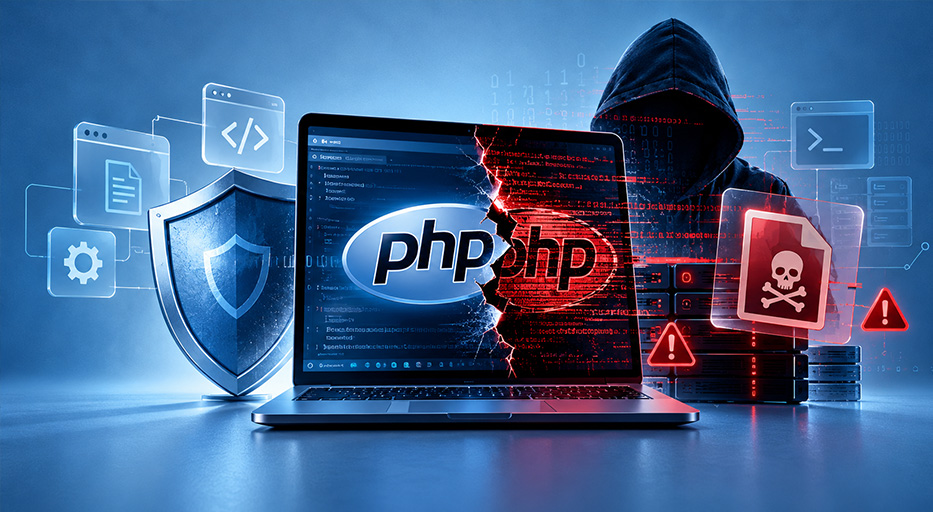
Imagine you run a government website and wake up to a message that says: switch it off. Not “patch it this week.” Switch it off, now.
That’s roughly what happened across Europe this week. Public health sites in the Netherlands, prefecture sites in France, web services in Finland and Belgium: all pulled offline as a precaution. The cause is a pair of flaws in PHP, the language behind a huge share of the web, and the name that stuck is the PHP2Shell vulnerability.
If you don’t run a server, should you care? A bit, yes. Here’s why, in plain English.
Quick facts
- Two critical flaws, CVE-2026-109618 and CVE-2026-109619, both scored 9.2 out of 10
- They let an attacker run code on a server without logging in
- Patches shipped October 21 in PHP 8.5.12, 8.4.27, 8.3.36 and 8.2.35
- Attacks started before the patch, and security firms say they’re ongoing
What Is the PHP2Shell Vulnerability?

PHP runs everything from WordPress blogs to online shops. Security firm Wiz estimates it powers roughly 70 percent of websites, though that doesn’t mean 70 percent are vulnerable.
The Tenable explainer breaks down the two bugs. One is a memory error that PHP mishandles while setting up a request. The other is a “use-after-free,” where leftover data from one request gets reused by the next. The name “php2shell” comes from a demonstration showing how the pair could be chained into full control of a server.
That’s the key difference from most bugs. This PHP security flaw sits in PHP itself, not in one plugin or app. Updating WordPress or Laravel doesn’t fix it. The PHP runtime underneath has to be updated.
How the PHP2Shell Vulnerability Unfolded in Five Days
The timeline is why this became a crisis and not just another patch day.
- October 17: Amazon’s honeypot spotted an exploitation attempt, four days before disclosure.
- October 20: The flaw identifiers leaked online, and a researcher’s demo video was posted by mistake. PHP moved its release forward a day.
- October 21: Patches landed. Within hours, WatchTower reported active attempts against both flaws.
The Hacker News timeline lays it out hour by hour. As of those reports, no source had confirmed a successful break-in, and CISA hadn’t added either flaw to its known-exploited list. That can change quickly.
Who Pulled the Plug
Reports describe a wave of precautionary shutdowns across Europe. Newsweek’s coverage and Australian wire reports point to:
- Netherlands: several websites of the public health institute RIVM taken offline, with government sites also reported down.
- France: prefecture and local-government websites temporarily disconnected.
- Germany: web services shut as a precaution, including the city of Mainz’s website.
- Finland and Belgium: government web services pulled offline.
- Denmark: services including a national school communication platform affected.
In the US, the NSA’s Cybersecurity Division advised organizations using PHP to prepare for an update and, if they can’t, to take the system offline. Newsweek reports no evidence that US federal sites have been compromised.
We couldn’t confirm every claim circulating, such as specific police or hospital sites. Treat anything beyond the list above as unverified until a government statement says otherwise.
Is Your Data at Risk?
This is the question people actually want answered.
Honest answer: there’s no confirmed consumer data breach tied to the PHP2Shell vulnerability so far. But Wiz Research says the flaws could let an attacker read a server’s memory, which can hold passwords, authentication tokens, and API keys. Those secrets belong to the site, not to you, but they can open doors to your data.
So the real risk is indirect. A shop, a clinic, or a council runs vulnerable software, an attacker gets in, and your account details are one step away. That’s why it belongs on any list of the latest cybersecurity threats.
Which Brands and Platforms Are in the Frame?
Security firm Sansec lists the usual PHP names as exposed to remote code execution: WordPress, Drupal, Joomla, Magento, Laravel, and others.
- WordPress: Automattic says its hosted services, including WordPress.com and WordPress VIP, were already protected. Self-hosted sites need their server’s PHP updated.
- Cloudflare: It switched on firewall rules by default, but called them a stopgap that only covers traffic routed through its network. It also saw attackers change payloads to dodge them.
- Ubuntu: Released fixes across supported versions, so many servers can get the patch from their operating system provider.
- PHP: The project itself says updating is the only complete fix, and older branches no longer supported only got minimal source backports.
Your Web Security Check: What to Do Now
If you run a website, this is your cyber-security alert. A quick web security check takes ten minutes:
- Find your PHP version. Your host’s control panel or a developer can tell you.
- Update to a fixed release, or ask your host to. The versions are 8.5.12, 8.4.27, 8.3.36 or 8.2.35.
- Restart PHP workers afterward so the patch actually takes effect.
- Check packaged PHP. Linux distributions sometimes carry the fix under an older-looking version number.
- Rotate secrets if you suspect exposure: passwords, API keys, tokens.
- Can’t update yet? Isolate the site from the public internet where possible, as the Dutch NCSC advises.
If you’re just a user, you can’t patch anything. Do the usual: unique passwords, multi-factor authentication, and a healthy suspicion of unexpected login or reset emails.
Why This One Feels Different
First, PHP is everywhere, so one bug touches shops, hospitals, and councils at once. Second, researchers at Calif and Wiz say they used AI models, showing how fast bugs are being found. We touched on the scale of AI investment in our look at where the Stargate sites stand today.
It also lands as sale season starts. Planning your buys? Our Amazon Prime Big Deal Days strategy pairs deals with safe habits.
The Takeaway From PHP2Shell vulnerability
Among the latest cybersecurity threats, the PHP2Shell vulnerability stands out because the fix already exists. The internet runs on shared plumbing, and when one pipe cracks, everyone downstream feels it. The risk now is how long it takes everyone to apply the patch.
Frequently Asked Questions
Two critical flaws in PHP, CVE-2026-109618 and CVE-2026-109619, that can let an unauthenticated attacker run code on a server.
Nearly all, back to 5.4. Fixes are in 8.5.12, 8.4.27, 8.3.36, and 8.2.35, with minimal backports for 7.4 to 8.1.
No confirmed consumer breach has been reported. The risk is that site secrets could be exposed.
No. The PHP runtime must be updated, though WordPress.com says its hosted services are already protected.
Yes. The NSA’s Cybersecurity Division, the Dutch NCSC and CERT-EU have all urged organizations to patch or isolate affected systems.