BEAUTY
 E-COMMERCE
 EDUCATION
 HEALTH
 TECHNOLOGY
 TRAVEL
You add a pair of trainers to your basket on Tuesday. Back on Thursday, they cost $12 more. Nothing about the shoes changed. So what did it do?
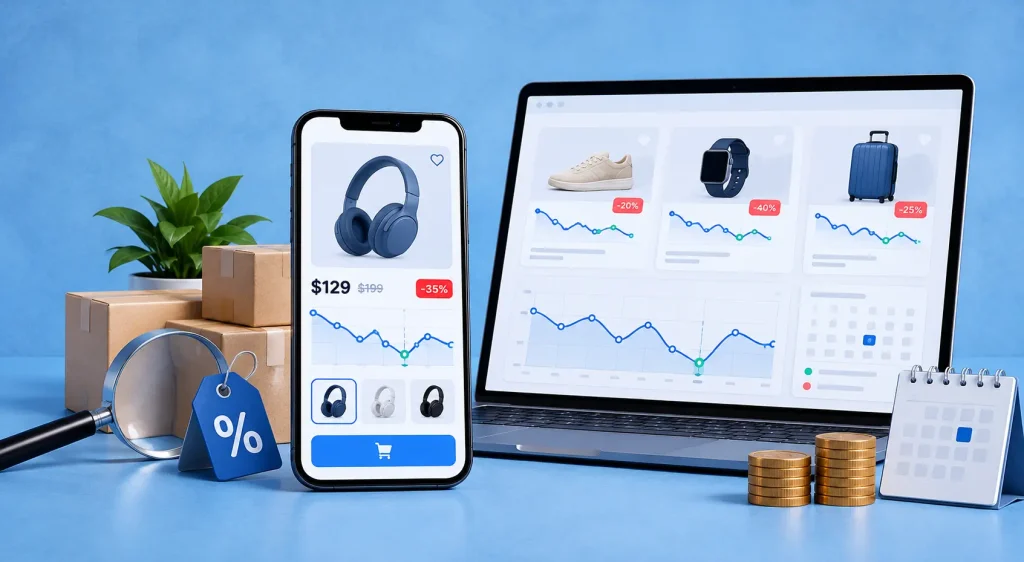
Almost certainly, the price did. Online prices aren’t printed on a tag anymore; software sets them based on demand, stock levels, and competitors, sometimes several times a day. That’s dynamic pricing, and once you understand how it behaves, it stops feeling random and starts working in your favor.
Quick facts
- Some retailers reprice a big chunk of their catalog every single day
- Prices tend to dip around predictable moments, like end-of-season clearances and Black Friday
- In the EU, “was” prices on discounts are now regulated
- A few free tools can show you whether a “deal” is actually a deal
What Is Dynamic Pricing, Really?

Dynamic pricing means a retailer automatically adjusts a product’s price based on signals like how many people are looking at it, how much stock is left, what rivals are charging, and the time of day.
It isn’t new; airlines have done it for decades. What’s new is how far it has spread. A 360° study reported by RetailWire found that the most price-dynamic retailers, including Amazon and Walmart, changed prices on 15 to 20 percent of their assortments at least once a day. The study is a few years old, so treat the exact numbers as a snapshot. The direction hasn’t reversed.
Why the Price Moved Between Tuesday and Thursday
A handful of things usually sit behind a price change:
- The competitor moves. If a rival drops a price, algorithms often match within hours.
- Demand spikes. A product going viral, or a cold snap that suddenly makes jackets relevant, can push prices up.
- Stock levels. Overstock gets marked down. Scarce sizes tend to hold their price.
- Timing. End of month, end of season, payday weekends. Retailers know when you’re spending.
- Your own behavior. Some stores test different prices on different shoppers, which is one reason a cleared browser sometimes shows something different.
None of this is sinister by default. It’s how a store with 100,000 products keeps up. But it does mean the sticker price you see is a moving target, and the moment you see it matters.
The Seasonal Sales Calendar: When Prices Reliably Drop
Some online shopping discounts aren’t a mystery. A rough seasonal sales calendar for shoppers in the US and Europe looks like this:
| When | What usually gets cheaper |
| January | Winter clothing, fitness gear, TVs (ahead of the big game) |
| Late January to February | European winter sales, outerwear, boots |
| March to April | Last season’s sportswear, spring clean-out stock |
| Late June to July | Summer sales across Europe, swimwear, outdoor gear |
| August | Back-to-school, laptops, backpacks |
| Late November | Black Friday and Cyber Monday: electronics, fashion, toys |
| December | Gift-adjacent clearance, then post-Christmas sales |
This year, Black Friday lands on November 27 and Cyber Monday on November 30, based on the standard calendar (the day after US Thanksgiving, then the following Monday). Mark both, but remember they aren’t the best moment for everything. Sneakers and winter coats often get their real low a few weeks later.
If you’re planning bigger buys, our guide to shopping Amazon Prime Big Deal Days the smart way shows how the pre-holiday sales fit into the picture.
How to Tell a Real Discount From a Fake One
Here’s the uncomfortable part. A “40% off” tag only means something if the “before” price was real.
Retailers sometimes raise a price for a few weeks and then cut it back, making the cut look bigger. That’s why Europe tightened the rules. Under the EU’s Omnibus Directive, when a seller announces a price reduction, the previous price it shows must be the lowest price from the prior 30 days. That covers general price cuts, online and in stores. It’s one reason European shoppers often see more honest “was” prices than they used to.
The US has no equivalent rule, so a bit of homework helps. Real online shopping discounts usually pass three quick checks:
- Is the “was” price believable? If you’ve seen the item at the lower price recently, the discount is mostly marketing.
- Does it match the seasonal pattern? A heavy coat at 50% off in July is probably a genuine clearance. At 50% off in November, it may just be a rotation of coupons.
- Is the same item cheaper elsewhere? Which brings us to comparison.
Online Price Comparison Without the Rabbit Hole
You don’t need ten tabs open. A good online price comparison takes about two minutes:
- Search the exact product name or model number, not a vague description
- Check the retailer’s own site plus one big rival
- Look at the total after shipping, taxes, and returns
- Look for price-match policies. Target’s policy, as reported by Doctor of Credit, matches Amazon and Walmart on items sold and shipped by them, and Target will also match its own lower price within 14 days of purchase. Policies change, so check the current terms before relying on this.
AI assistants are starting to do some of this for you. We looked at how ChatGPT, Dots, and Meta Muse handle shopping comparisons in a separate piece, and it’s worth a read before you let a chatbot pick your next purchase.
Use a Price History Tracker (It Just Takes 30 Seconds).
This is the single most useful habit in this article.
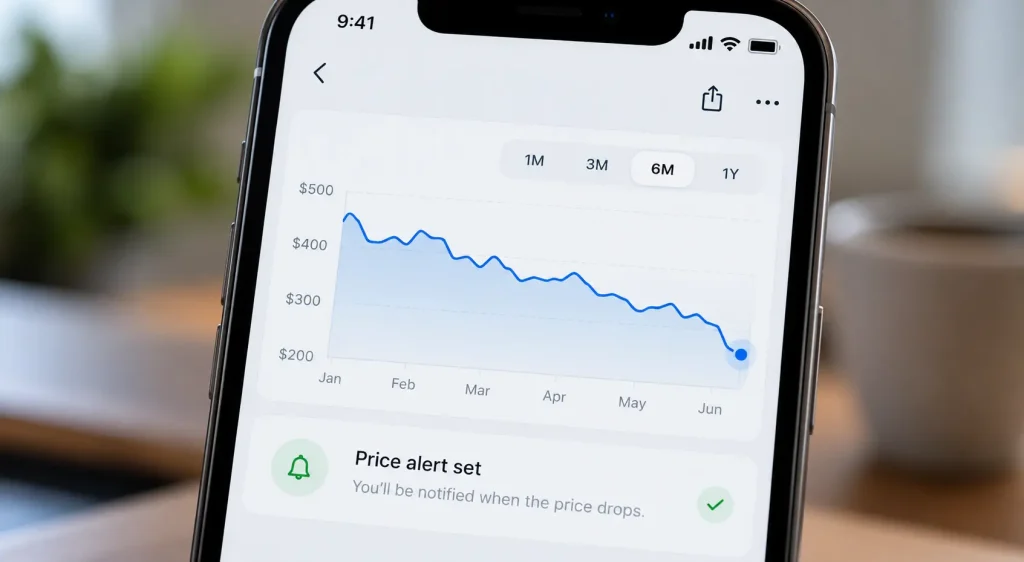
A price history tracker shows what a product has actually cost over weeks or months. Tools like CamelCamelCamel (Amazon) and Keepa plot the price on a chart. In ten seconds, you can see whether today’s “deal” is the lowest in a year or just a Tuesday.
Set an alert, then forget about it. When the price hits your number, you get an email. No refreshing, no FOMO.
Where to Check for Deals: Five Retailers Worth Watching
Different stores play the pricing game differently. Here’s where we’d look first.
- Walmart: Rollbacks, clearance, and flash deals all sit on one page. Prices on everyday items can shift often, so check before you buy.
- Target: The deals page lists current offers and coupons. Pair it with Target Circle for stacking.
- Nike: The sale section is where last season’s colorways land. Sizes in the middle of the range go first.
- Decathlon: Sports and outdoor gear with a steady sale section, especially strong at the turn of the seasons. Particularly popular across Europe.
- Answear: A fashion retailer popular in Central and Eastern Europe, with regular seasonal sales and Black Friday events. Offers vary by country, so pick your local store.
A Simple Plan for Your Next Purchase
You don’t need to be a spreadsheet person. Try this:
- Decide if it’s urgent. If you can wait two weeks, you’ve already saved money.
- Check the history. Open a price history tracker and look at the last 90 days.
- Compare two or three stores. Include shipping.
- Match it to the calendar. Is a sale event close? If yes, wait.
- Set an alert and walk away.
Dynamic pricing rewards patient people and punishes people who buy in a rush. That’s really the whole secret.
The Bottom Line
Prices move, and so do online shopping discounts, because the software behind them is built to chase demand, competitors, and stock. You can’t switch that off, but you can work with it. Learn the seasonal sales calendar, check the history before you pay, and treat every “limited time” label with healthy suspicion.
Frequently Asked Questions
Retailers use software that adjusts prices based on demand, stock, competitor prices, and timing. Some reprice a large part of their catalog daily.
There’s no universal answer, and it varies by product. Midweek and weekends often bring dips for clothing, but checking price history is more reliable than guessing.
Generally yes, in both the US and the EU. In the EU, the Omnibus Directive adds rules on how price reductions are advertised, including the 30-day lowest-price requirement.
Not reliably. Some stores test different prices for different shoppers, but there’s no proof incognito mode consistently gets you a lower price. Comparing across stores and using a tracker works better.
Not always. Electronics and toys often hit their low then, but many fashion and outdoor items reach a lower price in post-season clearances.