BEAUTY
  E-COMMERCE
  EDUCATION
  HEALTH
  TECHNOLOGY
  TRAVEL
When President Trump stood alongside Sam Altman, Larry Ellison, and Masayoshi Son at the White House in January 2025 to announce the Stargate Project, the number on the table was almost hard to process: $500 billion, 10 gigawatts of AI compute, built across the United States within four years. Nearly two years later, the real story isn’t quite that clean, but it isn’t a failure either. It’s somewhere more interesting and more honest in between.
The Sites That Are Actually Built
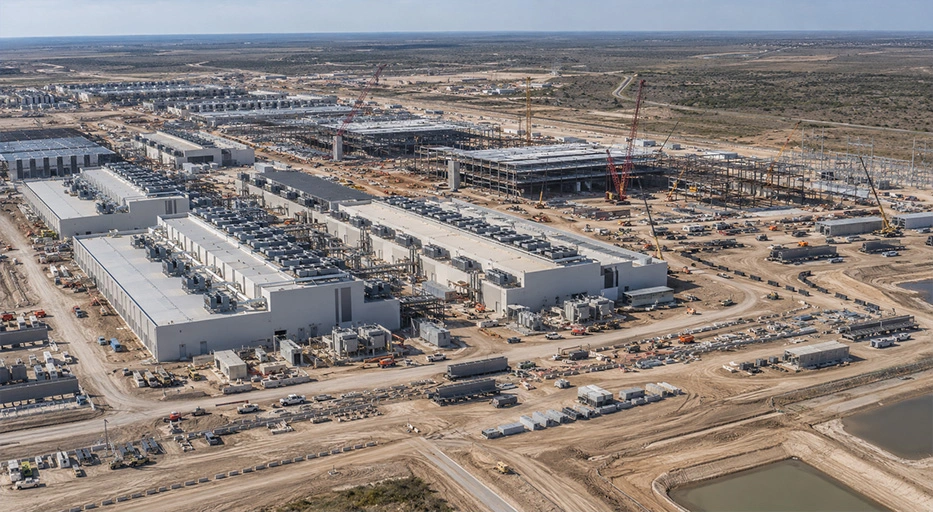
Start with what’s real. The flagship Stargate site in Abilene, Texas, is genuinely up and running. Built on Oracle Cloud Infrastructure, the campus had two buildings operational by September 2025, and as of this September, Oracle’s own delivery tracker puts the campus at roughly 75% of its planned capacity delivered, with all eight buildings expected to be complete by the end of 2026. This isn’t a hypothetical anymore; OpenAI has confirmed that GPT-6 Astra, released September 3, 2026, was pretrained on more than 100,000 Grace Blackwell GPUs running at this exact site.
In September 2025, OpenAI, Oracle, and SoftBank announced five additional OpenAI data centers on top of Abilene, detailed in OpenAI’s official announcement: sites in Shackelford County, Texas; Doña Ana County, New Mexico; Lordstown, Ohio; Milam County, Texas; and a Midwest location later confirmed as Saline Township, Michigan.
Combined, these five sites plus Abilene pushed total planned Stargate data center capacity to nearly 7 gigawatts and over $400 billion in committed investment, putting the project ahead of its original schedule to hit the full $500 billion, 10-gigawatt target.
The Complication Nobody Announced at a Press Conference
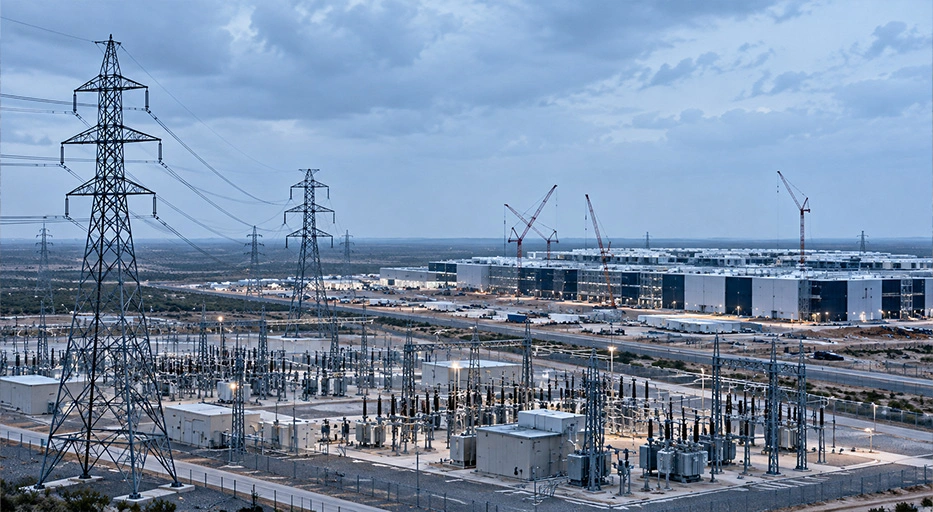
Here’s where the story gets more complicated than the original White House announcement let on. By February 2026, multiple reports indicated that Stargate LLC, the actual joint venture entity formed by OpenAI, Oracle, SoftBank, and Abu Dhabi’s MGX, had effectively stalled. Disagreements over site ownership and operational control meant the joint venture hired no staff, and no data centers were technically developed through Stargate LLC, even as individual sites kept moving forward.
Instead, OpenAI pursued bilateral deals directly with its partners rather than waiting for the joint venture structure to sort itself out. The OpenAI-Oracle relationship alone grew into a $300 billion, five-year cloud computing agreement covering roughly 4.5 gigawatts of capacity per year, one of the largest commercial cloud contracts ever signed, a deal IntuitionLabs breaks down in detail.
Separately, OpenAI and SoftBank reached their own compromise on the Texas site: SoftBank owns and develops the infrastructure, while OpenAI controls the design and holds a long-term lease. Neither of these deals technically ran through the original joint venture framework; they simply got built around it.
What This Means for the Oracle OpenAI Partnership Specifically
Of all the Stargate partnerships, the Oracle-OpenAI partnership has arguably done the most visible heavy lifting. Oracle began delivering NVIDIA GB200 racks at Abilene in June 2025 and has continued expanding its role as the primary infrastructure operator across several newer sites, including Project Jupiter, an Oracle-backed campus developed with STACK and BorderPlex using a revised energy architecture built around Bloom Energy fuel cells.
Stargate.how’s independent project tracker shows construction and data hall progress at that site as recent as September 8, 2026, though customer compute delivery there isn’t expected until the first half of 2027.
That timeline gap- sites under active construction now, but customers not receiving compute for another year or more- is fairly typical across the Stargate portfolio. Building an oracle data center at gigawatt scale simply takes time, regardless of how quickly the press releases come out.
Not Every Site Has Gone as Planned
It’s worth being straight about what hasn’t gone smoothly. A roughly 900-megawatt expansion planned next to the Abilene campus was dropped by OpenAI entirely and reallocated to Microsoft instead, though the core 1.2 gigawatt Abilene campus itself was never in jeopardy.
Local opposition has also become a real factor, an air-permit hearing tied to one Stargate-adjacent site, originally scheduled for September 14, 2026, had to be rescheduled after community pushback, a pattern that’s shown up at multiple proposed U.S. data center sites this year, not just Stargate’s.
Critics have also pointed out that permanent job numbers at completed sites tend to run far lower than the figures used in initial announcements, with independent estimates putting ongoing staffing at the Abilene campus closer to a few dozen workers rather than the tens of thousands cited when ground broke.
The Bottom Line
Two years in, the Stargate Project is neither the seamless $500 billion machine promised at the original announcement, nor the failure some early 2026 headlines suggested when the joint venture itself stalled. What’s actually happened is messier and, in a way, more believable: individual bilateral deals between OpenAI, Oracle, and SoftBank have quietly done what the formal joint venture structure couldn’t, moving real capacity into the ground at Abilene, Michigan, Ohio, Texas, and New Mexico, even while the original three-way entity remains functionally stuck.
For anyone tracking the broader AI infrastructure race, that distinction between the headline commitment and how the actual building gets done is the real story of Stargate right now.
Sites like these don’t get built in a vacuum, either. The International Energy Agency’s 2026 analysis on energy and AI found that electricity demand from AI-focused data centers surged 50% in 2025 alone, a pace that helps explain both how fast projects like Stargate are moving and why so many of these sites keep running into grid capacity and permitting fights along the way.
Frequently Asked Questions
A joint venture announced in January 2025 between OpenAI, Oracle, SoftBank and Abu Dhabi’s MGX that plans to spend up to $500 billion on U.S. AI data centre infrastructure and become 10 gigawatts of compute capacity by 2029.
Yes. The flagship campus can be accessed live with Oracle Cloud Infrastructure, and it has already trained OpenAI’s GPT-6 Astra model with approximately 75% of their planned capacity by September 2026.
Not exactly. In February 2026, reports suggested the formal Stargate LLC was stumbling due to a dispute over control, while OpenAI, Oracle, and SoftBank have pursued bilateral agreements for the purpose of growing capacity.
In one of the biggest cloud contracts in history, Oracle and OpenAI have inked a partnership that includes $300 billion in cloud computing contracts, spanning approximately 4.5 gigawatts of capacity annually.
As of late 2026, the flagship Abilene campus plus five additional confirmed sites in Texas, New Mexico, Ohio, and Michigan are in various stages of construction, with more sites reportedly under evaluation.